


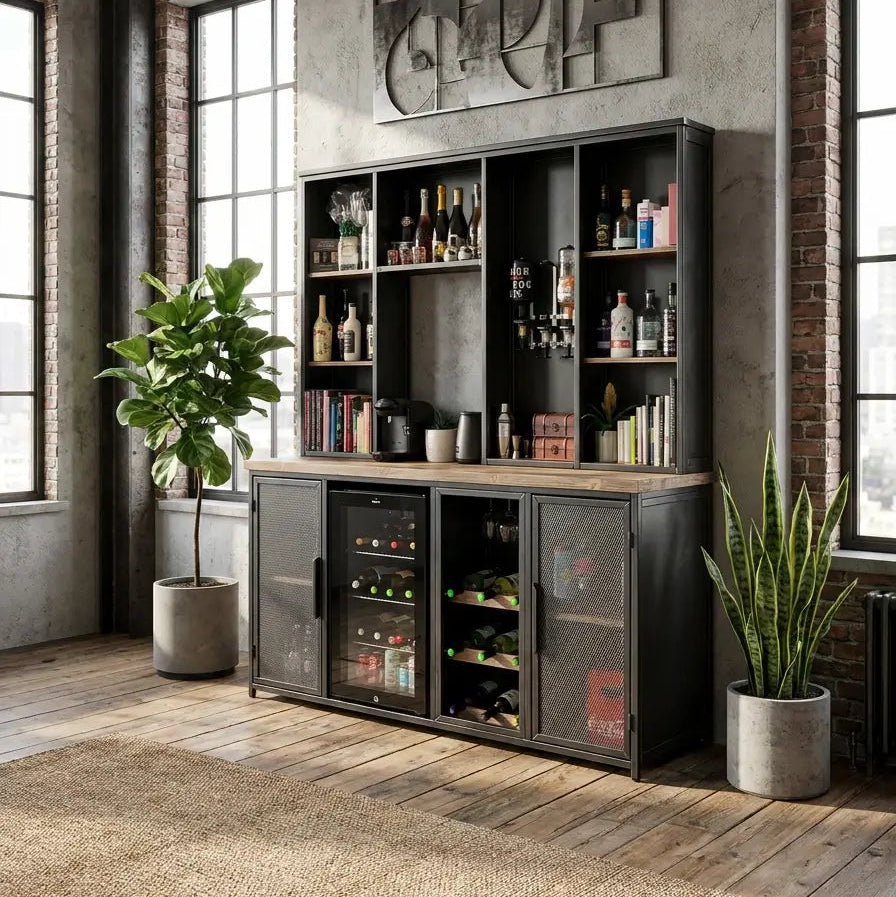
Wine Cabinet Buying Guide: How to Choose the Right Drinks Cabinet for Your Home
A dedicated wine cabinet does two things well: it stores your collection properly and makes a genuine statement in your living space. Whether you're a serious collector or simply someone who likes to have a good bottle ready to open, choosing the right cabinet comes down to a handful of practical decisions.
This guide covers everything you need to know — from storage capacity and temperature considerations to materials, style, and how to find a cabinet that works as hard aesthetically as it does practically.
Do You Need a Wine Fridge or a Wine Cabinet?
It's worth being clear on the difference before you shop:
- Wine fridges are temperature-controlled appliances — ideal if you're storing wine for more than a few months or want to serve whites and rosés at precise temperatures.
- Wine cabinets (or drinks cabinets) are furniture-first pieces — designed to display and organise your collection at room temperature, with a focus on visual impact and accessibility.
For most homes, a wine cabinet is the right choice. If your collection stays moving — bottles bought and opened within weeks or months — ambient storage in a cool room is perfectly fine. A well-made cabinet keeps bottles horizontal (important for cork integrity), away from direct light, and looking great.
What to Look for in a Wine Cabinet
Storage Capacity
Think realistically about how many bottles you typically have on hand at once, then add a buffer. A cabinet that's always full to capacity isn't practical. Common sizing guides:
- Small (up to 12 bottles): Ideal for occasional entertaining — fits neatly on a sideboard or shelf.
- Mid-size (12–24 bottles): The sweet spot for most households — enough variety without dominating the room.
- Large (24+ bottles): For committed collectors or those who entertain regularly.
Bottle Orientation
Wine stored for any length of time should lie horizontally to keep the cork moist and prevent oxidation. Look for cabinets with angled or horizontal rack slots rather than upright bottle storage, which is better suited to spirits.
Build Quality and Materials
A wine cabinet carrying 20+ bottles of wine is carrying significant weight. Look for:
- Solid shelf construction — no flex under load
- A stable, well-engineered frame with levelling feet
- Surfaces that won't stain or warp if a bottle drips
Our wine cabinets combine a clear coat lacquered steel frame with solid redwood shelving available in 6 colour options — built to carry a full collection without compromise.
Style and Finish
A wine cabinet earns its place by looking as good as it functions. Industrial-style cabinets — steel frame, solid wood shelves — work particularly well in living rooms and dining spaces because they display bottles as part of the décor rather than hiding them away.
Consider how the cabinet will sit alongside your existing furniture. A darker wood tone reads as more formal and traditional; a lighter, natural finish feels contemporary and relaxed.
Placement
For ambient storage, placement matters:
- Avoid direct sunlight — UV light degrades wine over time.
- Keep away from heat sources (radiators, sunny south-facing walls).
- A consistently cool room (ideally 12–18°C) is ideal.
- Avoid areas with heavy vibration (near washing machines, busy hallways).
Wine Cabinet Styles for Different Rooms
Living Room
Choose a mid-to-large cabinet that doubles as a display piece. Industrial designs with open shelving let the bottles themselves become part of the room's visual texture — especially effective with a curated mix of reds, whites, and champagne.
Dining Room
A wine cabinet placed near the dining table is both practical and impressive when entertaining. Aim for something accessible from a seated position — waist height or slightly above works well.
Kitchen
In a kitchen setting, a compact cabinet on a worktop or a freestanding unit in a corner keeps wine to hand without cluttering prep space. Industrial finishes complement both modern and country kitchen styles.
Hallway or Snug
A tall, narrow wine cabinet makes excellent use of dead space in a hallway or snug. Look for slim profiles — under 40 cm deep — that don't obstruct circulation.
How to Style Your Wine Cabinet
- Face labels outward for an instantly curated look.
- Group by variety — reds together, whites together — for easy navigation when entertaining.
- Add a few champagne or prosecco bottles upright at the top as visual accents.
- A small cluster of wine glasses on or beside the cabinet completes the vignette.
- Soft lighting — a wall sconce above or a small lamp nearby — makes the whole display feel considered.
Ready to Choose Your Wine Cabinet?
Browse our full range of industrial wine cabinets — each one built from clear coat lacquered steel and solid redwood, designed to store your collection properly and look exceptional doing it.
Not sure which size or finish is right for your space? Get in touch and we'll help you narrow it down.